
Walking into a periodontist’s office and hearing words like “osseointegration,” “abutment,” or “alveolar ridge” can make even the most prepared patient feel uncertain. Understanding dental implant terminology transforms confusing clinical conversations into productive discussions about your oral health, allowing you to ask better questions and make more informed decisions about your treatment.
Middlesex Periodontics & Dental Implants serves patients throughout East Brunswick and the surrounding New Jersey communities with comprehensive dental implant services. Led by Dr. Daniel Reich, a periodontist with decades of training and hands-on experience in dental implantology, our team explains every aspect of your treatment in clear, accessible language while delivering the highest standard of care.
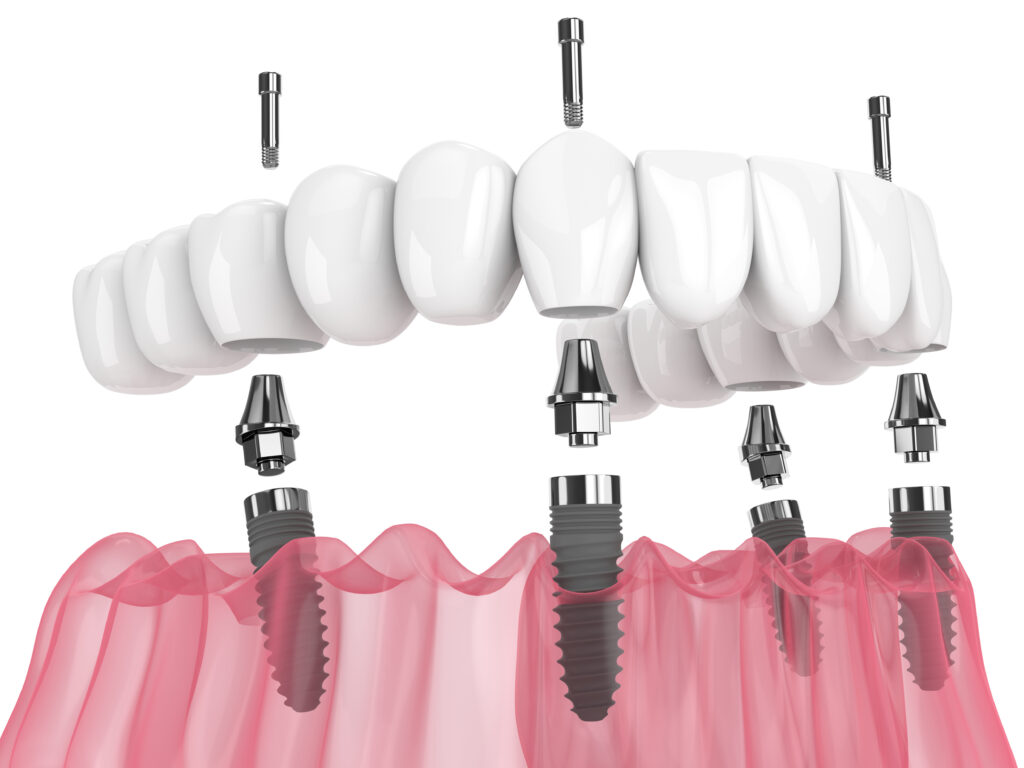
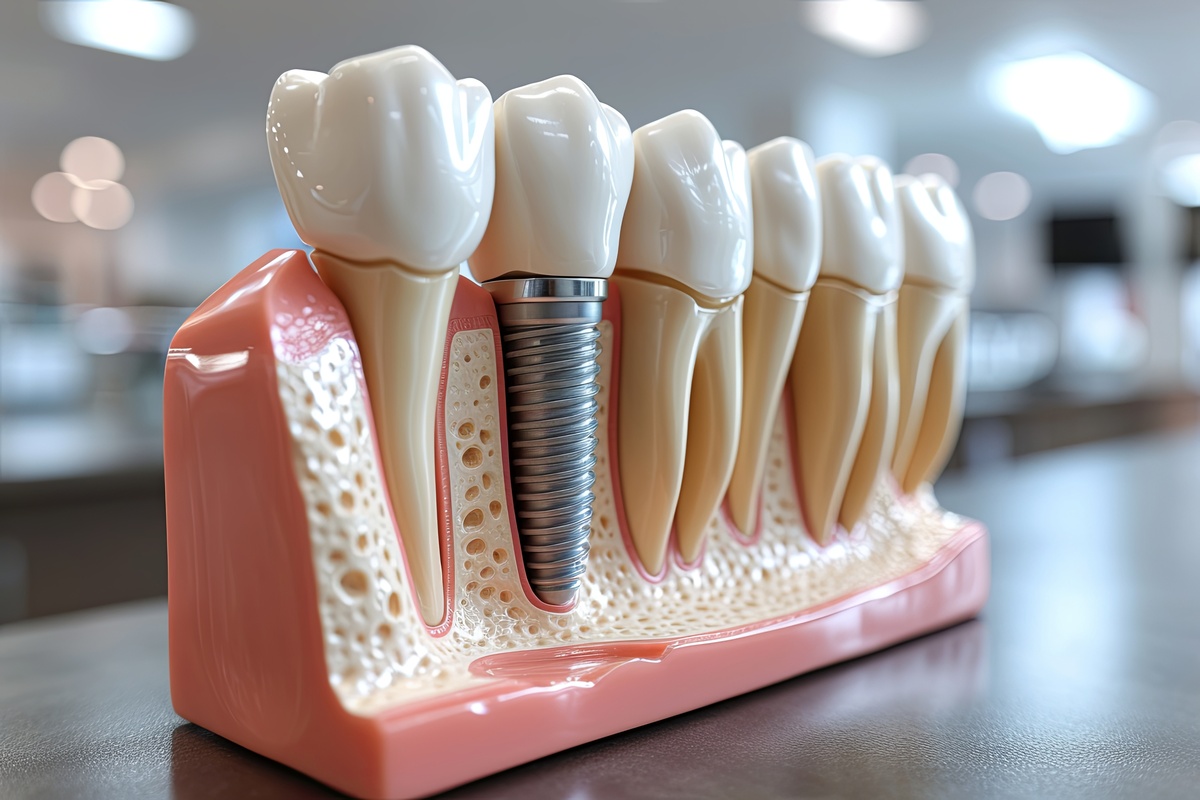
A dental implant consists of multiple parts that work together to replicate the function and appearance of a natural tooth. Each component serves a specific purpose in creating a stable, long-lasting restoration.
The implant fixture, sometimes called the implant body or post, is a small titanium screw that your periodontist surgically places into the jawbone. This fixture acts as an artificial tooth root, providing the foundational anchor for the entire restoration. Titanium is the material of choice because of its biocompatibility, meaning the body accepts it without triggering an immune response. The surface of modern implant fixtures features microscopic texturing that encourages bone cells to attach and grow around the metal.
The abutment is a connector piece that attaches to the top of the implant fixture after healing is complete. This component emerges through the gum line and provides the attachment point for the final restoration. Abutments come in various materials, including titanium, zirconia, and gold alloys. Your periodontist selects the appropriate abutment based on the location of the implant, aesthetic requirements, and the type of restoration being placed.
The prosthetic restoration is the visible portion of your dental implant that looks and functions like a natural tooth. For single tooth replacement, this is typically a crown made from porcelain, ceramic, or porcelain-fused-to-metal. For patients missing multiple teeth, the prosthetic may be a bridge or a full arch restoration. The term “prosthesis” refers broadly to any artificial replacement for missing body parts, and in dentistry, it encompasses all types of implant-supported teeth.
The quality of each component affects long-term success. Dr. Reich uses high-quality implant materials from trusted manufacturers, ensuring the fixture, abutment, and prosthetic work together for lasting results.
Several terms describe the procedures and techniques involved in placing dental implants. Familiarity with this vocabulary helps you understand what to expect during and after surgery.
Implant placement refers to the surgical procedure during which the periodontist creates a small channel in the jawbone and inserts the implant fixture. This procedure typically involves making an incision in the gum tissue, using specialized drills to prepare the bone site, threading the implant into position, and closing the tissue with sutures. The entire process is performed under local anesthesia, and many patients report less discomfort than they anticipated.
Immediate dental implant placement occurs when the implant fixture is inserted into the socket immediately after a tooth is extracted, during the same appointment. This approach can reduce overall treatment time and may preserve more of the natural bone structure. Not every patient qualifies for immediate placement, as adequate bone density and the absence of infection are required.
Guided implant surgery uses advanced imaging and computer planning to create a surgical guide that directs exact implant positioning. Your periodontist takes a CBCT scan (cone beam computed tomography) of your jaw and uses specialized software to virtually plan the optimal placement angle, depth, and location for each implant. A custom surgical template is then fabricated, which fits over your teeth or gums during surgery and contains sleeves that guide the drill to the precise planned position.
Flapless surgery is a minimally invasive technique in which the periodontist places the implant through a small punch in the gum tissue rather than making a traditional incision and lifting a flap of tissue away from the bone. This approach can result in less post-operative swelling and faster healing for appropriate candidates.
These procedures require precision and advanced training. As a periodontist with decades of experience, Dr. Reich completed years of specialized residency training beyond dental school focused specifically on surgical implant placement and soft tissue management.
Patients who need to replace all teeth in an upper or lower arch encounter terminology specific to comprehensive implant solutions.
All-on-4 is a treatment concept that uses four strategically angled implants to support a complete arch of fixed teeth. The posterior implants are typically tilted at an angle to maximize contact with available bone and avoid anatomical structures like the maxillary sinus or inferior alveolar nerve. All-on-X is a broader term that describes similar full arch protocols using any number of implants, commonly four to six.
A fixed hybrid prosthesis, sometimes called a hybrid denture or fixed-detachable prosthesis, is a full arch restoration that is permanently attached to implants and can only be removed by a dental professional. This prosthesis typically features acrylic teeth and gum-colored material supported by a metal framework that screws onto the implants.
A provisional restoration is a temporary prosthetic worn during the healing phase before the final restoration is fabricated. For full arch cases, Dr. Reich provides high-quality temporary prosthetics that allow patients to have functional teeth while osseointegration occurs. Patients return the day after surgery for insertion of this temporary, which is more comfortable than many alternatives.
Implant-supported overdentures are removable prosthetics that snap onto implants using attachment systems. Unlike traditional dentures that rest on the gums and may slip or require adhesive, overdentures gain retention and stability from the underlying implants. Patients remove them for cleaning but enjoy significantly improved chewing function and confidence compared to conventional dentures.
Not every provider offers the same level of care for full arch cases. Dr. Reich provides high-quality temporary restorations inserted the day after surgery, and his approach to full arch treatment prioritizes both function and patient comfort throughout the process.
Many patients require bone grafting procedures to build sufficient jawbone volume before or during implant placement. These terms describe the various grafting materials and techniques available.
Your periodontist at Middlesex Periodontics & Dental Implants selects the appropriate graft material based on the size of the defect, location, and your individual health factors.
Socket preservation, also called ridge preservation, is a grafting procedure performed immediately after tooth extraction. When a tooth is removed, the surrounding bone begins to resorb and shrink, sometimes losing significant volume within the first few months. Socket preservation involves placing bone graft material into the empty socket and covering it with a membrane to maintain the bone dimensions needed for future implant placement.
Ridge augmentation rebuilds the height or width of the alveolar ridge when bone loss has already occurred. This procedure may involve placing block grafts, particulate bone material, or using guided bone regeneration techniques to restore adequate bone volume for implant support.
A sinus lift, also called sinus elevation or sinus augmentation, adds bone to the upper jaw in the area of the premolars and molars. The maxillary sinus is an air-filled cavity located above the upper back teeth, and when upper molars are lost, the sinus often expands downward into the space previously occupied by tooth roots. During a sinus lift, the periodontist accesses the sinus floor, gently elevates the sinus membrane, and packs bone graft material into the space created between the membrane and the existing bone.
Guided bone regeneration (GBR) uses barrier membranes to direct bone growth into specific areas while preventing faster-growing soft tissue from filling the space. The membrane creates a protected environment where bone cells can gradually regenerate without competition from gum tissue cells.
Selecting the right graft material requires clinical judgment. Dr. Reich evaluates your bone density, health history, and treatment goals to recommend the most appropriate grafting approach for your situation.
Modern implant dentistry relies on advanced diagnostic tools and planning processes.
Cone beam computed tomography (CBCT) is a specialized type of X-ray that creates three-dimensional images of your teeth, jawbone, nerves, and soft tissues. Unlike traditional dental X-rays that produce flat, two-dimensional images, CBCT allows your periodontist to evaluate bone density, measure bone dimensions, and visualize the precise location of anatomical structures in three dimensions.
Digital treatment planning software allows your periodontist to virtually place implants on your CBCT scan, evaluating different positions and angulations before any surgery occurs. This technology improves precision and predictability while allowing you to see a preview of your proposed treatment.
A surgical guide is a custom-fabricated template created from your digital treatment plan. This device fits precisely over your teeth or gums and contains metal sleeves that direct the surgical drills to the exact planned position, depth, and angle for each implant.
Advanced planning leads to predictable outcomes. Dr. Reich uses CBCT imaging and digital treatment planning to map your anatomy precisely, ensuring each implant is placed at the optimal angle and depth.
Understanding the biological changes that occur after implant placement helps you appreciate why healing time is essential and what happens beneath the surface during recovery.
Osseointegration is the biological process by which living bone cells attach directly to the titanium surface of the implant fixture. This term, coined by Swedish orthopedic surgeon Per-Ingvar Brånemark in the 1950s, describes the structural and functional connection between bone and implant that makes dental implants so stable and successful. During osseointegration, bone cells called osteoblasts migrate to the implant surface, deposit new bone matrix, and eventually mature into solid bone that locks the implant firmly in place. According to the American Academy of Periodontology, this process typically takes three to six months to complete.
Primary stability refers to the mechanical stability of an implant immediately after placement, before any biological healing has occurred. This initial stability comes from the friction and compression between the implant threads and the surrounding bone. High primary stability is important because it allows the implant to remain motionless during the early healing phase, which is necessary for successful osseointegration.
Secondary stability develops over time as osseointegration progresses and bone grows around and into the textured surface of the implant. This biological stability eventually exceeds the initial mechanical stability and represents the long-term anchor that will support your restoration for years or decades.
Loading refers to placing functional force on a dental implant by attaching a restoration and using it for chewing. Conventional loading waits until osseointegration is complete before attaching the final crown or prosthetic. Immediate loading describes protocols in which a temporary restoration is attached to the implant at the time of surgery or within days afterward. Early loading falls between these approaches, typically placing the restoration several weeks after surgery but before full osseointegration.
Rushing this process can lead to implant failure. Dr. Reich carefully monitors your healing progress and uses diagnostic imaging to confirm successful integration before moving forward with your restoration.
Several terms describe factors that influence implant outcomes and potential complications.
Implant success indicates that an implant meets established criteria for function, comfort, aesthetics, and bone stability without complications. Implant survival means the implant remains in place and is functional, even if minor issues have occurred. The success rates for dental implants placed by periodontists are among the highest of any surgical procedure.
Peri-implant mucositis is inflammation of the soft tissue surrounding an implant without bone loss. This condition is analogous to gingivitis around natural teeth and is reversible with proper treatment and improved oral hygiene. Signs include redness, swelling, and bleeding when probing around the implant.
Peri-implantitis is a more serious inflammatory condition that affects both the soft tissue and the bone around an implant, resulting in progressive bone loss. This condition is analogous to periodontitis around natural teeth. Early detection and treatment are important for saving affected implants. Risk factors include periodontal disease history, smoking, diabetes, and poor oral hygiene.
Implant failure occurs when an implant does not achieve or maintain osseointegration and must be removed. Early failure happens before osseointegration is complete, often due to infection, excessive movement during healing, or inadequate bone quality. Late failure occurs after the implant has been successfully integrated and in function, typically caused by peri-implantitis, excessive biting forces, or systemic health changes.
High success rates depend on proper diagnosis and technique. Dr. Reich’s specialized training in periodontics means he evaluates your gum and bone health before placing implants, reducing the risk of complications like peri-implantitis.
Understanding the anatomical structures involved in dental implant treatment helps you visualize what your periodontist discusses during consultations.
The mandible is your lower jawbone, a horseshoe-shaped bone that holds the lower teeth and forms the lower jaw structure. The maxilla is your upper jaw, consisting of two fused bones that form the roof of the mouth, floor of the nasal cavity, and support for the upper teeth. The alveolar process, or alveolar ridge, is the portion of either jaw that contains the tooth sockets. This ridge naturally resorbs after tooth loss through a process called alveolar bone resorption.
The inferior alveolar nerve runs through a canal inside the mandible and provides sensation to the lower teeth, lower lip, and chin. The mental foramen is an opening in the mandible where a branch of this nerve exits to supply the lip and chin area. The maxillary sinus, as mentioned above, is the air-filled cavity in the upper jaw. Your periodontist carefully evaluates the position of these structures using imaging to plan safe implant placement that avoids nerve damage or sinus complications.
Gingiva is the clinical term for gum tissue. Attached gingiva is the firm, pink tissue that is bound tightly to the underlying bone and does not move when you pull on your lip or cheek. Keratinized tissue is the toughened outer layer of gum tissue that provides protection against mechanical trauma and bacterial invasion. Having adequate keratinized tissue around dental implants is associated with better long-term outcomes. The gum grafting procedures performed by Dr. Reich can enhance soft tissue quality around implant sites.
Implant placement near the sinus or nerve canal requires precise planning to avoid complications. Dr. Reich uses CBCT imaging to map these structures in detail, ensuring each implant is positioned safely and at the optimal depth for long-term stability.
Dental implant treatment represents a significant investment in your oral health, and understanding the financial terms you may encounter helps you plan accordingly. These terms relate to pricing structures, insurance coverage, and warranties that protect your investment.
Understanding your dental implant costs upfront helps you plan with confidence. Middlesex Periodontics & Dental Implants provides detailed fee estimates before treatment begins and accepts many dental PPO plans, including Delta Dental Premier and Cigna PPO. Financing through Cherry is also available to help make your care more accessible.
Understanding the professional qualifications behind your periodontist’s training helps you feel confident in your care. These terms describe the education, certifications, and professional affiliations that distinguish a trained periodontist from a general dentist.
Not all dental implant providers have the same level of training. Dr. Reich completed a periodontics residency after dental school, dedicating years to studying implant surgery, bone grafting, and soft tissue management. This advanced education means he approaches your care with the depth of knowledge that comes from specialized training, not just general dentistry experience.
Understanding dental implant terminology empowers you to participate actively in your treatment planning and communicate more effectively with your periodontal team. Dr. Daniel Reich and the staff at Middlesex Periodontics & Dental Implants welcome your questions and take pride in explaining every aspect of your care in terms that make sense.
When you choose a periodontist for your dental implants rather than a general dentist, you benefit from advanced training in both the surgical placement and the management of supporting bone and gum tissue. Dr. Reich brings decades of hands-on experience to every procedure, using high-quality implant materials and precise diagnostic technology to help ensure long-term success.
Our East Brunswick practice also provides high-quality temporary restorations for full arch patients, with insertion the day after surgery for improved comfort during healing. Call us at 732-257-7300 to schedule a consultation and discuss your dental implant needs.
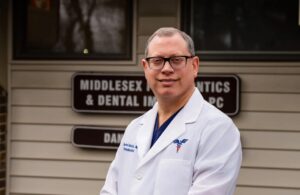
Dr. Daniel Reich is a board-certified periodontist with over 30 years of specialized experience in periodontal care and dental implantology. As a Diplomate of the American Board of Periodontology, he brings advanced expertise to every procedure at Middlesex Periodontics & Dental Implants. Dr. Reich earned his Doctor of Dental Medicine (D.M.D.) from the University of Pennsylvania School of Dental Medicine and completed his Specialty Certificate in Periodontics at SUNY Stony Brook. He currently serves as Director and Associate Professor of Periodontics at Touro College of Dental Medicine, where he trains future dental specialists while staying at the forefront of the latest periodontal techniques and technology.
We make quality periodontal care affordable with flexible payment options.
We participate with Delta Dental Premier and Cigna PPO and work with many dental PPO plans. We files claims on your behalf and provides benefit estimates before treatment.
We offer financing through Cherry Financing and other trusted partners, allowing you to break down treatment costs into manageable monthly payments that fit your budget.
Questions? Call us at 732-257-7300 to discuss your insurance coverage and financing options.

Looking for an experienced periodontist in East Brunswick, NJ? Dr. Daniel Reich and our team at Middlesex Periodontics & Dental Implants provide expert periodontal care and dental implant services to patients throughout Middlesex County, including Monroe Township, Old Bridge, Sayreville, and surrounding communities.
We serve patients from East Brunswick, Monroe Township, Old Bridge, Sayreville, South River, Spotswood, and throughout Central New Jersey. Our office schedules most appointments within 10 days, and we offer same-day emergency appointments when available. No referral needed—you can schedule directly with our board-certified periodontist.
We’re dedicated to providing expert periodontal care and dental implant services in a comfortable, welcoming environment. Our advanced technology, experienced team, and patient-centered approach make achieving optimal oral health easier than ever. From gum disease treatment to dental implants, we’re here to help you achieve your healthiest smile.
Contact us today to schedule your appointment.
The content on this website has been reviewed by Dr. Daniel Reich for educational purposes only and is not a substitute for professional dental advice, diagnosis, or treatment. Treatment outcomes vary based on individual needs. Contact our East Brunswick office for personalized care or dental emergencies.