
If you’ve started avoiding certain foods, cutting your meals into smaller pieces, or quietly dreading mealtimes because chewing has become uncomfortable, something is telling you to pay attention. Difficulty eating is not simply a sign of aging or sensitivity; it is often one of the first real-world signals that your gum and bone health may be in decline.
At Middlesex Periodontics & Dental Implants in East Brunswick, NJ, Dr. Daniel Reich and our team work with patients who come in frustrated by exactly this kind of change. As a board-certified periodontist and Diplomate of the American Board of Periodontology with over 28 years of experience, Dr. Reich helps patients understand what is actually driving their discomfort and what can be done to restore both their oral health and their quality of life.
Why Chewing Becomes Difficult
Chewing pain or difficulty does not appear out of nowhere. In most cases, it builds gradually, which is part of why so many people dismiss it as something minor. By the time it starts disrupting meals, the underlying issue has often been developing for months or even years.
The Role of Gum Disease
Periodontal disease is one of the most common causes of eating discomfort. As bacteria accumulate below the gumline and infection takes hold, the gum tissue pulls away from the teeth, pockets form, and the supporting bone begins to break down. This process creates instability in the teeth, makes them sensitive to pressure, and causes tenderness in the surrounding tissue. Chewing, which puts repeated force on your teeth and gums, becomes noticeably unpleasant when that foundation is compromised.
Bone Loss and Tooth Loosening
Advanced gum disease does not stop at the soft tissue. Over time, the infection attacks the bone that anchors your teeth, and patients begin to feel their teeth shift or wobble. Jawbone loss and deterioration can progress silently, and many patients are unaware of how much has already occurred until a clinical exam reveals it. Loose teeth are painful to bite with and difficult to control, which forces people to change how they eat, often favoring one side of the mouth or avoiding hard foods entirely.
What Difficulty Eating Can Lead To
Left unaddressed, the problems behind chewing difficulty tend to compound. Patients begin eliminating nutritious foods from their diet, particularly those that are crunchy, chewy, or fibrous, in favor of softer options that are easier to manage. According to the CDC, tooth loss can lead to poor diet, low self-esteem, difficulty speaking, and an overall lowered quality of life. The connection between oral health and systemic health is well established, and when nutritional intake suffers because eating has become uncomfortable, the effects extend beyond the mouth.
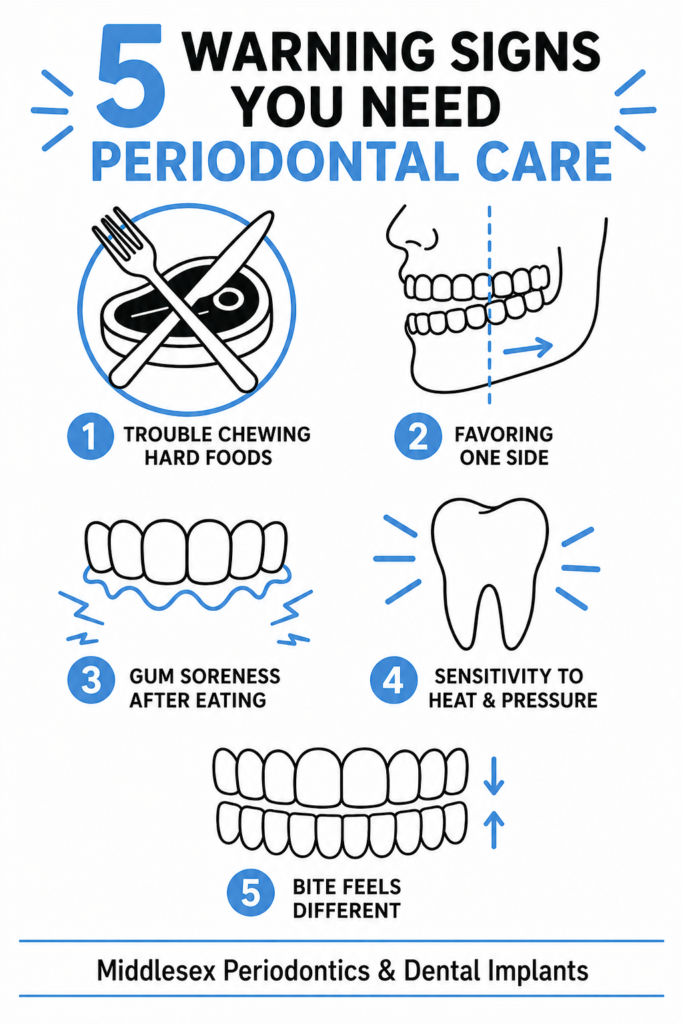
The following are common signs people notice before they seek periodontal care:
- Avoiding hard foods: steak, raw vegetables, and crusty bread become difficult or painful to chew
- Chewing on one side: favoring one side to compensate for pain or a loose tooth on the other
- Tenderness after eating: lingering soreness in the gums or jaw after meals
- Sensitivity to temperature or pressure: teeth that ache when biting down or exposed to hot or cold foods
- Feeling like teeth have shifted: changes in how your bite feels when your teeth come together
These are not nuisances to push through. They are signals worth investigating before the damage becomes more significant.
Treatment Options That Can Help
The good news is that periodontal disease and its effects on chewing are treatable. Early and moderate cases often respond well to non-surgical approaches. Periodontal maintenance helps patients manage the condition over time and prevent further deterioration once active disease has been treated. For cases where teeth have already been lost, replacing missing teeth with dental implants can restore full chewing function and protect the surrounding bone from additional loss.
The goal of treatment is not only to stop the disease process but also to restore patients’ confidence to eat comfortably. When chewing becomes difficult, it affects how people socialize, what they enjoy eating, and how they feel day to day. Restoring that function matters.
Get Answers About Your Chewing Difficulties in East Brunswick, NJ
If meals have started to feel like something to get through rather than enjoy, the team at Middlesex Periodontics & Dental Implants is here to help you find out why. Dr. Daniel Reich brings decades of periodontal training and a thorough, patient-centered approach to every evaluation. No referral is needed, and same-day emergency appointments are available for patients in acute discomfort.
We welcome patients from East Brunswick and surrounding communities throughout central New Jersey. To schedule your consultation, please reach out through our contact form.